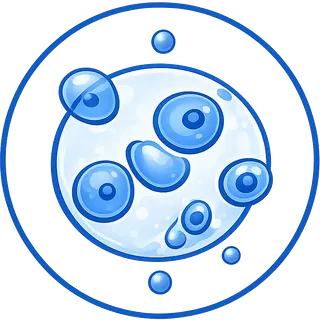
BM-MSCs
Mesenchymal stem cells from which osteoblasts originate.
A formulation born from a scientific assumption.
BlastiMin Complex® was born from the idea that bone formation depends on multiple biological processes that must operate in a coordinated way.
Osteoblasts operate within a biological microenvironment influenced by numerous factors, including low-grade chronic inflammation, oxidative stress, and the presence of transcription activators that regulate the osteoblastogenesis process.
From this observation our intervention strategy was born.
Is it possible to amplify the osteogenic response by acting simultaneously on the markers involved in bone formation and on the biological microenvironment that conditions them?
The activity of the formulation was evaluated in a model of BM-MSCs, mesenchymal stem cells from which osteoblasts originate.
The effect observed on the two key markers of osteogenesis, ALP and COL1A1, was higher than the sum of the effects obtained with the individual molecules, documenting a synergistic response between the ingredients of the formulation.
| Marker | Expected additive effect | Observed effect | Fold of Synergy |
|---|---|---|---|
| ALP | +21% | +87% | 4,1× |
| COL1A1 | +147% | +310% | 2,1× |
ALP and COL1A1 represent two key markers of osteoblastic differentiation. Their coordinated activation indicates that mesenchymal stem cells (BM-MSCs) are undertaking the biological program that leads to the formation of new bone tissue.
In the BM-MSC model, the formulation promotes the coordinated activation of the osteogenic program, favoring the formation of the organic bone matrix.
Mesenchymal stem cells from which osteoblasts originate.

First transcription factor that starts the osteogenic program.

Marker of the early phase of osteoblastic differentiation.
Main protein of the organic bone matrix.
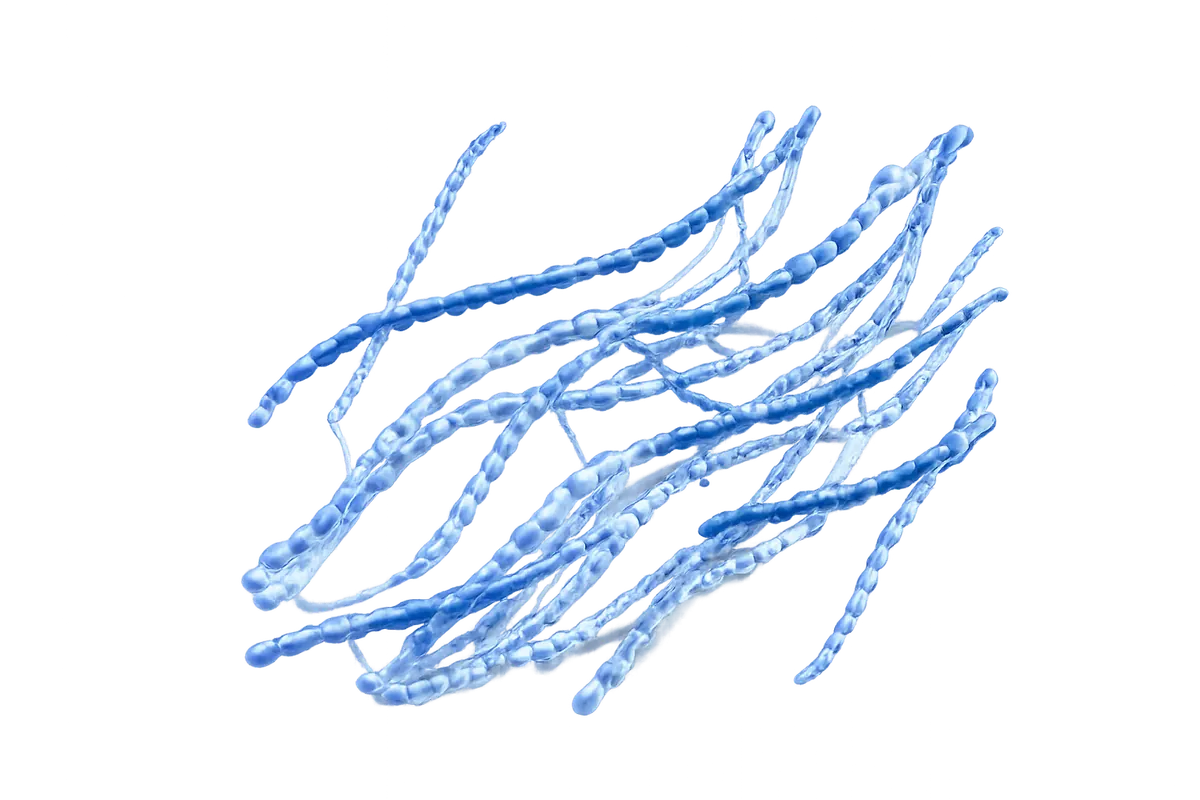
Organic structure that forms the scaffolding of bone.
Mesenchymal stem cells from which osteoblasts originate.
First transcription factor that starts the osteogenic program.
Marker of the early phase of osteoblastic differentiation.
Main protein of the organic bone matrix.
Organic structure that forms the scaffolding of bone.
The formulation promotes the coordinated activation of the osteogenic program in BM-MSCs, as demonstrated by the synergy observed on ALP and COL1A1.
This biological response translates into greater early osteoblastic activity and increased synthesis of type I collagen, favoring the formation of the organic bone matrix, an essential biological prerequisite for subsequent mineralization.
The simple availability of minerals is not sufficient to generate new bone tissue: the deposition of calcium and phosphate can only occur on an adequately formed organic matrix, on which the quality, organization and strength of bone tissue depend.
Take home message
The BlastiMin Complex® formulation, through the coordinated activation of RUNX2, ALP and COL1A1, drives the completion of the osteogenic program in mesenchymal stem cells (BM-MSCs).
These biological effects are reflected in clinical biomarkers and in the maintenance of bone mineral density observed in an independent prospective clinical study (12 months of treatment) conducted on 44 post-menopausal female patients with osteopenia or osteoporosis.
A patented synergy.
A documented biological rationale.
A new perspective for supporting bone physiology.