Clinical study
Clinical results
When the biological rationale is confirmed in clinical practice.
Independent prospective clinical study (12 months of treatment) conducted on 44 post-menopausal female patients with osteopenia or osteoporosis.
Preclinical synergy
European Patent
EP4205733A1
12-month prospective
clinical study
Observed results
Main biological endpoint
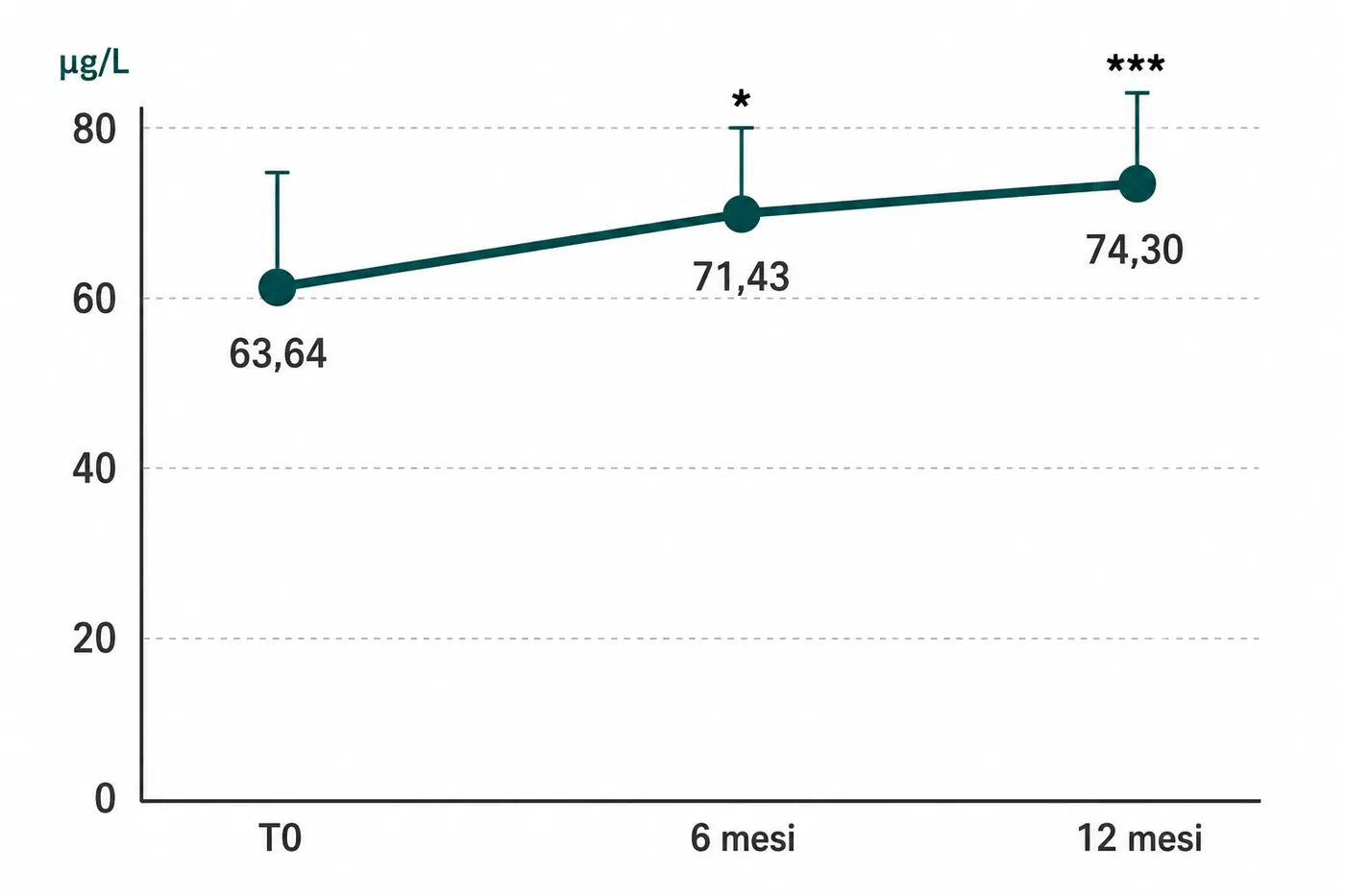
P1NP
Biomarker of new bone formation unanimously elected as the world reference gold standard by the leading authorities in the field, the IOF (International Osteoporosis Foundation) and the IFCC (International Federation of Clinical Chemistry).
The main result observed
P1NP
Progressive increase in P1NP, significant at 6 months (* p < 0.05) and highly significant at 12 months (*** p < 0.001).
P1NP (N-terminal propeptide of type I procollagen) is the international reference biomarker (IOF/IFCC) for the evaluation of bone formation.
A result that reinforces the interpretation
PCR
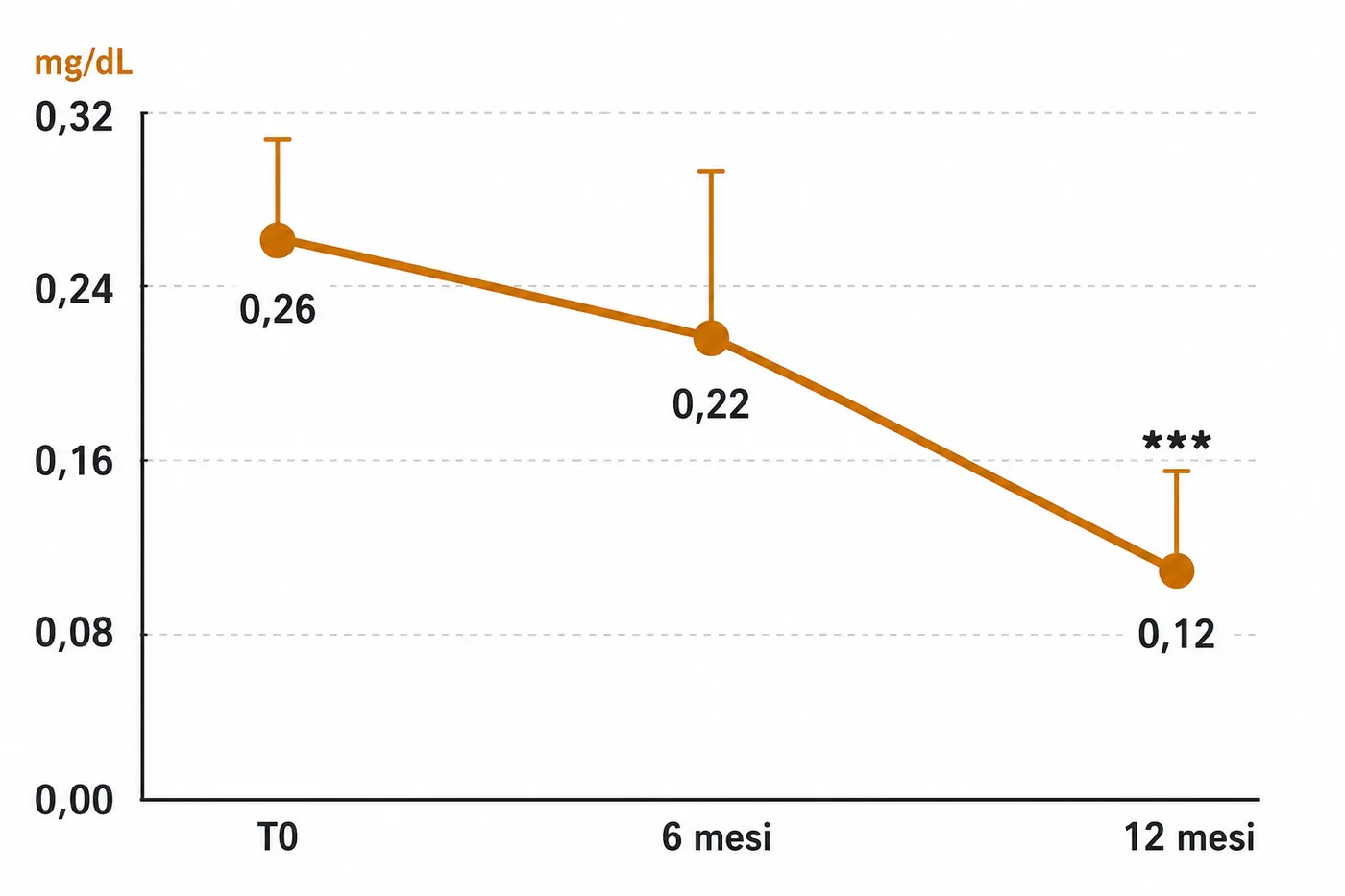
Statistically significant reduction of C-Reactive Protein at 12 months (*** p < 0.001).
Low-grade chronic inflammation associated with aging (inflammaging) is recognized as one of the factors that influence the biological microenvironment in which osteoblasts operate.
Two results. One biological reading.
P1NP
Support for bone formation
PCR
Modulation of processes associated with inflammaging
Biological profile consistent with the formulation rationale of BlastiMin Complex®
Complementary results supporting the clinical evaluation
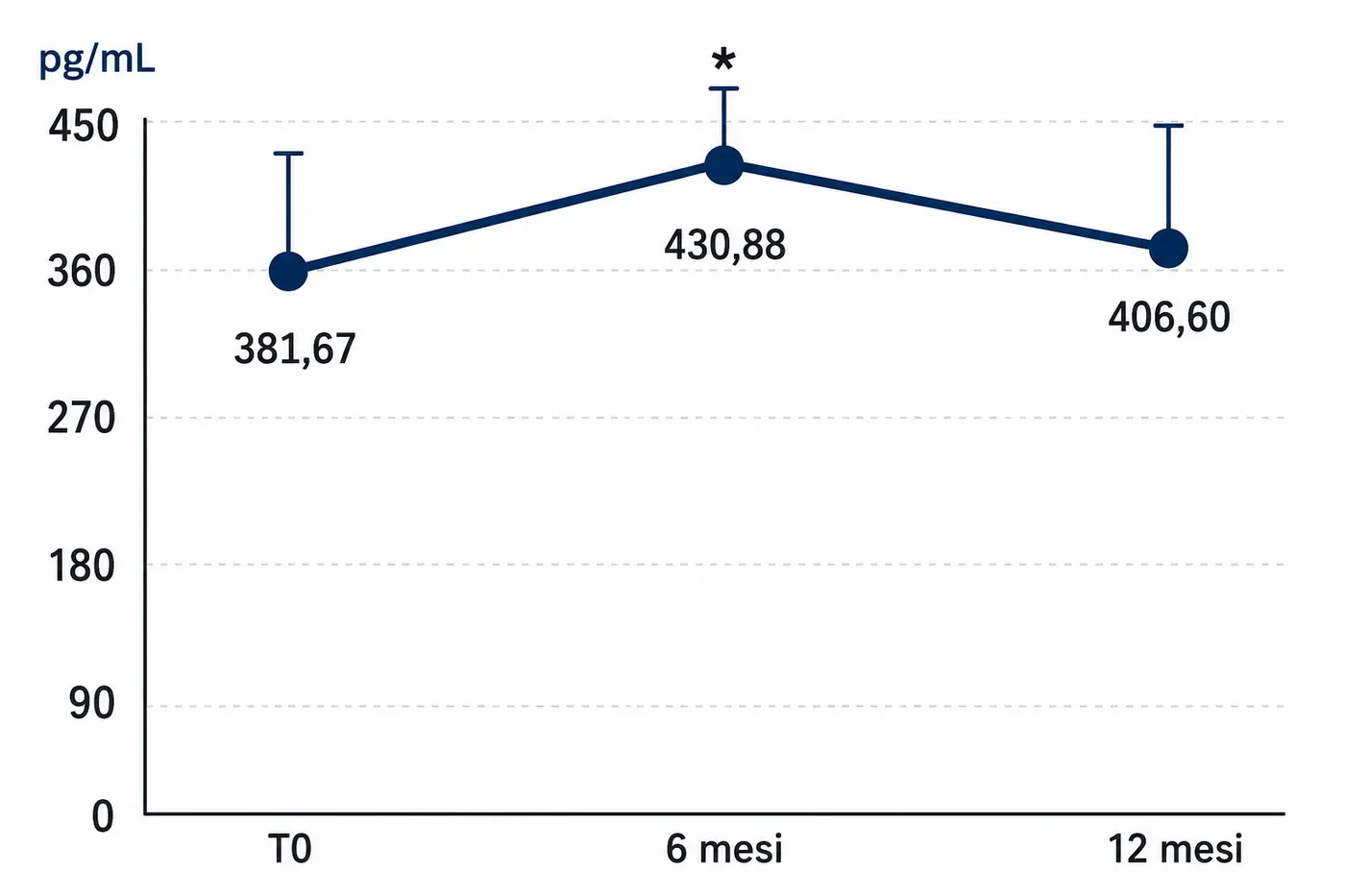
CTX - Physiological remodeling dynamics
C-telopeptide of type I collagen
biphasic pattern consistent with an initial phase of turnover activation followed by progressive rebalancing. *p<0.05 vs T0
T-score stability
Clinical endpoint achieved
Absence of clinically relevant worsening of T-score after 12 months of treatment with BlastiMin Complex®
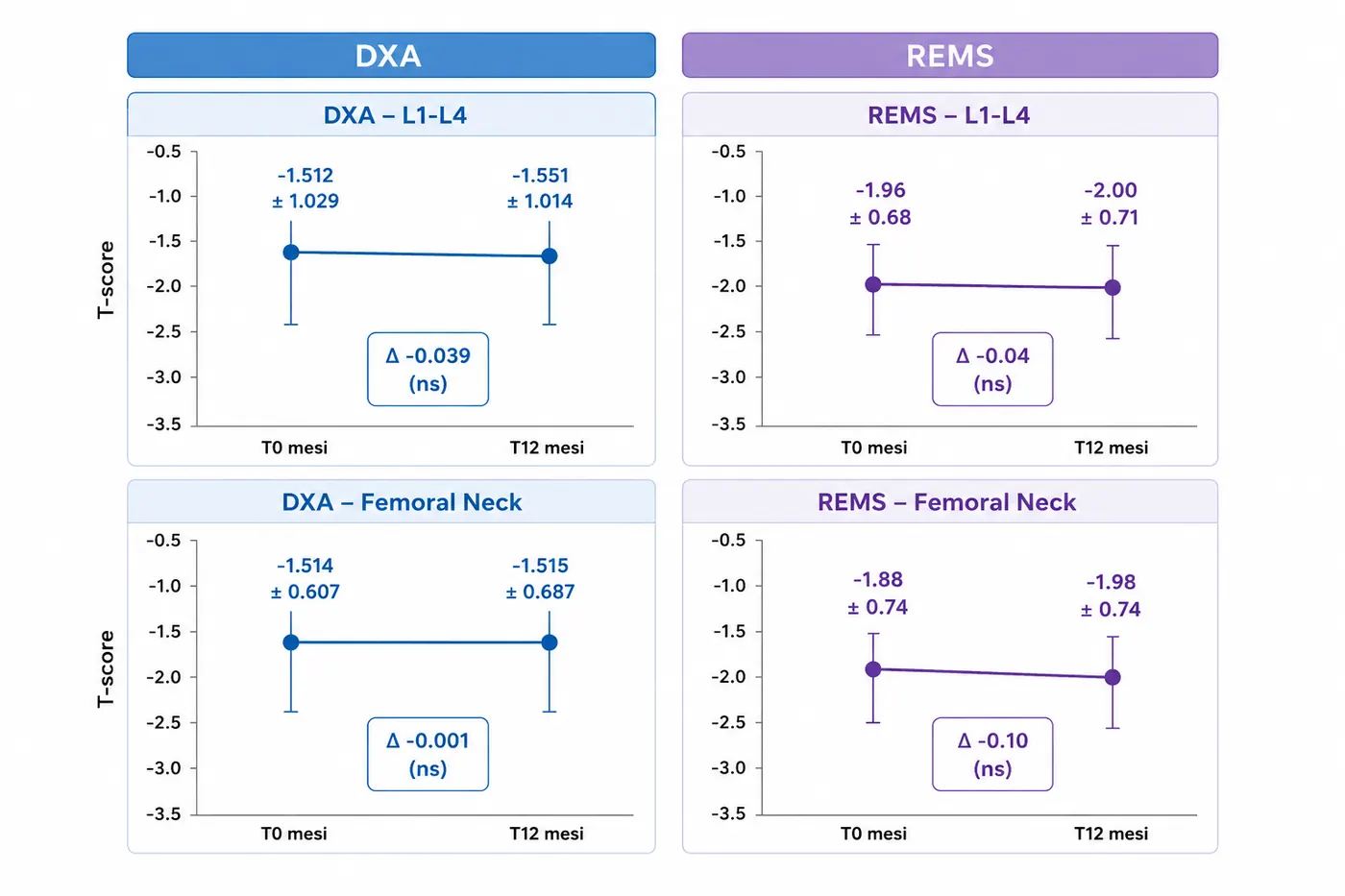
Confirmation obtained through two independent methods: DXA • REMS
Participants belonged to a population of women in the early years after menopause, a phase characterized by the highest physiological rate of bone loss (about 2-3% per year).
In this context, the stability observed through DXA and REMS represents a clinically relevant finding.
The clinical significance
P1NP is the main biological indicator of the body's ability to produce new bone matrix.
The reduction in CRP suggests a microenvironment more favorable to osteoblastic activity.
The overall results are consistent with the goal of supporting bone formation and modulating the processes associated with inflammaging.
BlastiMin Complex® fits into the therapeutic window of primary prevention, where no osteoanabolic solutions are currently available.
Take home message
Biological consistency of clinical evidence
The overall clinical results observed outline a biological profile consistent with the formulation rationale of BlastiMin Complex®. The increase in P1NP, associated with the reduction in CRP, the physiological dynamics of CTX and the stability of bone mineral density, suggests support for the processes of organic bone matrix formation, an essential biological prerequisite for subsequent mineralization.
Prospective clinical study, 12 months, post-menopausal women with osteopenia or osteoporosis. Data expressed as mean ± SD.